






Over 20 Years of Experience

Cataracts are one of the most common age-related eye conditions in Singapore, affecting over 60% of adults aged 60 and above, yet up to two-thirds remain undiagnosed. At EyeWise Vision Clinic, early assessment means timely care, better outcomes and a smoother path to clear vision.

The Specialist Leading Your Care

Dr. Christopher Khng

Medical Director, Senior Consultant Ophthalmologist & Cataract Specialist
MBBS · M.Med(Ophth) · FRCS(Edin) · AMS(Ophth 2003)

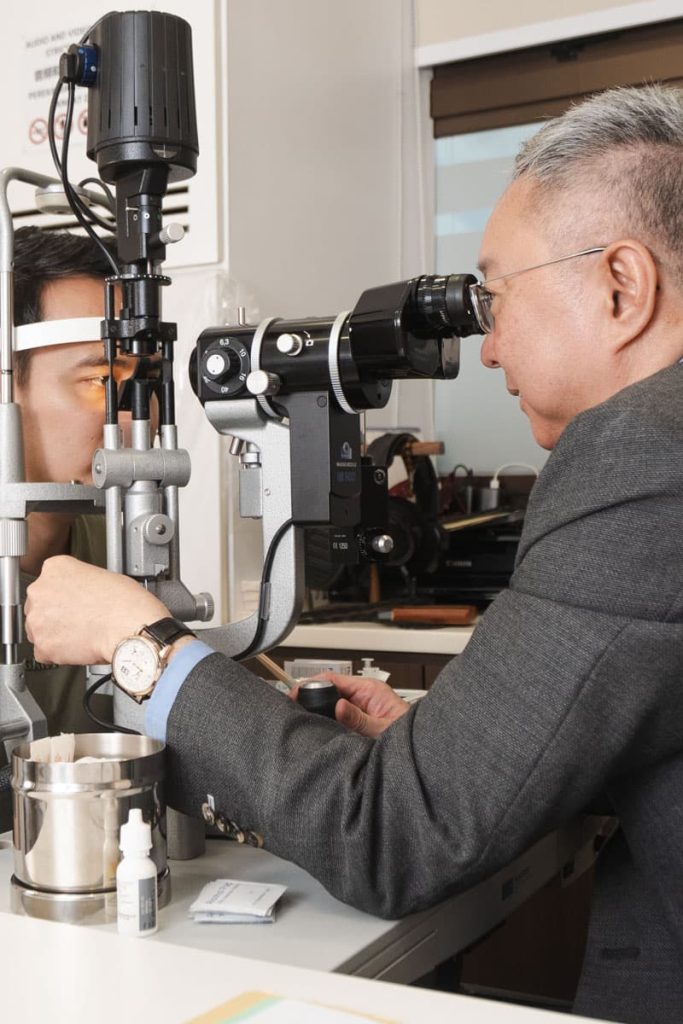
Dr. Christopher Khng is a Fellowship-Trained eye specialist with over two decades of experience in cataract surgery and anterior segment reconstruction. He manages a broad spectrum of cataract cases, from routine to highly complex, utilising bladeless surgical techniques and advanced lens implants.

Dr. Khng completed his initial medical training at Aberdeen University in Scotland, where he received academic distinctions in medicine, before graduating from the National University of Singapore (NUS). His extensive international training has shaped a surgical approach focused on precision, safety, and minimal visual compromise.

His subspecialty expertise extends to iris repair and complex intraocular lens procedures, areas often required when standard cataract surgery alone is insufficient.

Are Cataracts Affecting Your Daily Life?

Cataracts develop gradually. Many patients adapt to the changes without realising how much their vision has declined. Here are common signs to look out for:

Blurry or Hazy Vision

Vision that gradually worsens over time.

Halos & Glare

Seeing rings or glare around lights.

Difficulty Driving at Night

Reduced confidence in low-light conditions

Faded or Yellowed Colours

Colours appear dull or washed out.

Frequent Prescription Changes

Needing updated spectacles more often than usual

Double Vision in One Eye

Seeing a ghost image even with the other eye closed.

Cataracts are generally not painful, but early assessment allows for timely planning and better surgical outcomes.

Cataract Surgery at EyeWise Vision Clinic

Cataract surgery removes the cloudy natural lens and replaces it with a clear intraocular lens (IOL), restoring vision clarity. At EyeWise Vision Clinic, every step — from surgical technique to lens selection — is tailored to your individual eye health and visual goals.

Our Surgical Approach

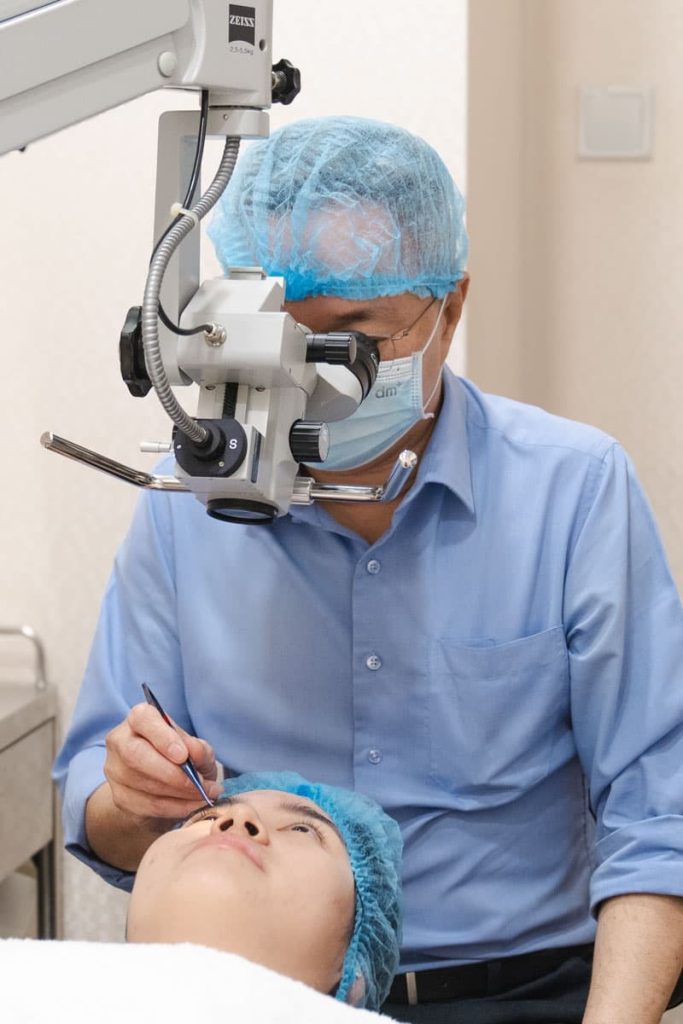
Cataract surgery at EyeWise involves removing the cloudy natural lens and replacing it with a clear intraocular lens (IOL). The surgical approach used is determined by your individual eye condition and clinical assessment.
 
Dr. Khng personally evaluates each patient and recommends the most appropriate technique and lens type based on your eye health, lifestyle, and visual goals.
Every case is approached with careful pre-operative planning to support a precise, consistent outcome.
Comfort, Safety and Recovery

Surgery is performed as a day procedure under local anaesthesia. Most patients return home the same day and are able to resume normal activities within a week. Our team provides clear aftercare guidance to support a smooth recovery.

Post-operative reviews are scheduled at 1 day, 1 week, and 1 month, with Dr. Khng overseeing your care throughout.Many patients notice improved vision within the first few days, with full visual stabilisation over the following weeks.

What Happens If Cataracts Are Left Untreated?

Three-Stage Progression

Early Stage
Vision changes may be subtle at first. As the lens gradually clouds over, clarity, contrast and colour perception begin to decline.
 
Moderate Stage
Without monitoring or treatment, cataracts can start to affect daily activities. Reading, driving and recognising faces become harder. Vision may appear dimmer or more blurred, impacting both safety and quality of life.
 
Advanced Stage
Cataracts become denser, leading to more pronounced visual impairment. In rare cases, very advanced cataracts may be associated with raised intraocular pressure, which can cause discomfort or additional complications.

Not Every Cataract Case is Straightforward

Some patients have pre-existing conditions or anatomical considerations that make cataract surgery more technically demanding. Dr. Khng has extensive experience navigating these cases with careful pre-operative planning and specialised surgical techniques.

  • High Myopia: Requires precise IOL calculations and careful retinal assessment
  • Subluxated (Unstable) Lenses: Weak lens support due to ageing, trauma or systemic conditions
  • Small Pupils & Floppy Iris Syndrome: Often associated with certain medications, requiring modified techniques
  • Hard / Mature Cataracts: Denser cataracts that demand greater surgical care and corneal protection
  • Co-existing Eye Conditions: Surgery may be recommended when a cataract interferes with the assessment or management of other conditions, such as diabetic retinopathy or age-related macular degeneration (AMD)

If you have been told your cataract may be more complex, a thorough evaluation with Dr. Khng can help clarify your options and set realistic expectations.

The Process: 4 Steps

What to Expect at EyeWise Vision Clinic

Initial Assessment

A thorough eye examination including vision testing, intraocular pressure measurement, and dilated lens evaluation. Findings and management options are discussed clearly.

Pre-Operative Planning

Detailed measurements are taken to select the most suitable IOL. You will receive clear instructions on medications, eye drops, and what to arrange before surgery.

Day Surgery Procedure

Surgery is performed under local anaesthesia as a day procedure. Most patients return home the same day, with the surgical approach determined by your individual case.

Post-Operative Recovery

Follow-up reviews at 1 day, 1 week, and 1 month. Most patients resume normal activities within a week, with vision continuing to stabilise over the following weeks.

Our Insurance Partners

Frequently Asked Questions

Can't find what you're looking for?

Clinical Questions

Surgery is typically recommended when vision loss begins to affect daily activities, such as reading, driving, or recognising faces. In some cases, surgery may also be advised if the cataract is interfering with the management of another eye condition.

Surgery is usually performed one eye at a time, with the second procedure scheduled a few weeks later, depending on individual recovery and needs.

Cataract surgery is one of the most commonly performed and well-established procedures in ophthalmology. As with any surgery, risks exist and will be discussed in detail during your consultation. Careful pre-operative planning and precise surgical technique help minimise these risks.

Cost & Financing Questions

At private eye centres in Singapore, cataract surgery typically ranges from $8,000 to $10,000+ per eye. The final cost depends on the type of intraocular lens (IOL) selected, the complexity of your case, and the surgeon’s experience. A detailed quotation is provided following your clinical assessment.

Yes. EyeWise Vision Clinic is a MOH-accredited facility, and MediSave can be used to offset the cost of surgery. Current withdrawal limits are:

  • Up to $2,450 per eye for the surgical procedure (Table 4A)
  • Up to $300 per day for hospital/facility charges
  • Flexi-MediSave: Patients aged 65 and above may withdraw an additional $300 per year for outpatient treatments

Please note that MediSave limits are subject to CPF Board policy and may be updated. Our team can advise on current limits at the time of your consultation.

Cataract surgery may be claimable under personal or corporate Integrated Shield Plans, subject to your policy terms, coverage tier, and any applicable deductible or co-insurance. EyeWise Vision Clinic is on the panels of several major insurers, including:

  • AIA HealthShield Gold Max
  • Great Eastern SupremeHealth
  • Prudential PruShield
  • Income IncomeShield

We recommend checking with your insurer before your consultation. Our team is happy to assist with pre-authorisation queries.

Yes, premium IOLs such as multifocal, trifocal, and EDOF lenses carry an additional cost over standard monofocal lenses. The MediSave surgical claim amount is the same regardless of lens type, but the out-of-pocket difference for a premium lens is borne by the patient. Dr. Khng will explain the cost implications of each lens option during your consultation so you can make an informed decision.

A detailed quotation is provided following your clinical assessment, once the recommended IOL and surgical approach have been determined. The estimate will typically cover the surgeon’s fee, facility charges, anaesthesia, pre- and post-operative consultations, and any applicable lens cost. Our team will walk you through MediSave deductions and insurance offsets where applicable.

Pre and Post Surgery Questions

There are several IOL options available, each suited to different visual needs and lifestyles. Monofocal lenses provide clear vision at one distance and are the most affordable option. Toric lenses correct astigmatism. Multifocal and trifocal lenses aim to reduce dependence on glasses for near, intermediate, and distance vision. EDOF (Extended Depth of Focus) lenses provide a continuous range of vision with generally fewer visual disturbances. Dr. Khng will recommend the most suitable option following your clinical assessment.

This depends on the type of IOL chosen. Premium lenses such as multifocal, trifocal, or EDOF lenses are designed to reduce dependence on glasses. Dr. Khng will advise you on the most suitable option based on your lifestyle and visual goals.

Many patients notice an improvement within the first few days. Full stabilisation of vision typically takes several weeks as the eye heals.

No. Once the cloudy natural lens is removed and an IOL is implanted, the cataract cannot return. In some patients, the membrane behind the lens may become cloudy over time — this is a separate, easily treatable condition.

Concerned About Your Vision? We're Here to Help.

Whether you're noticing early changes in your vision or have been advised to consider surgery, a consultation with Dr. Christopher Khng is the first step toward clarity. Our team is available to answer your questions and guide you through every stage of care.